
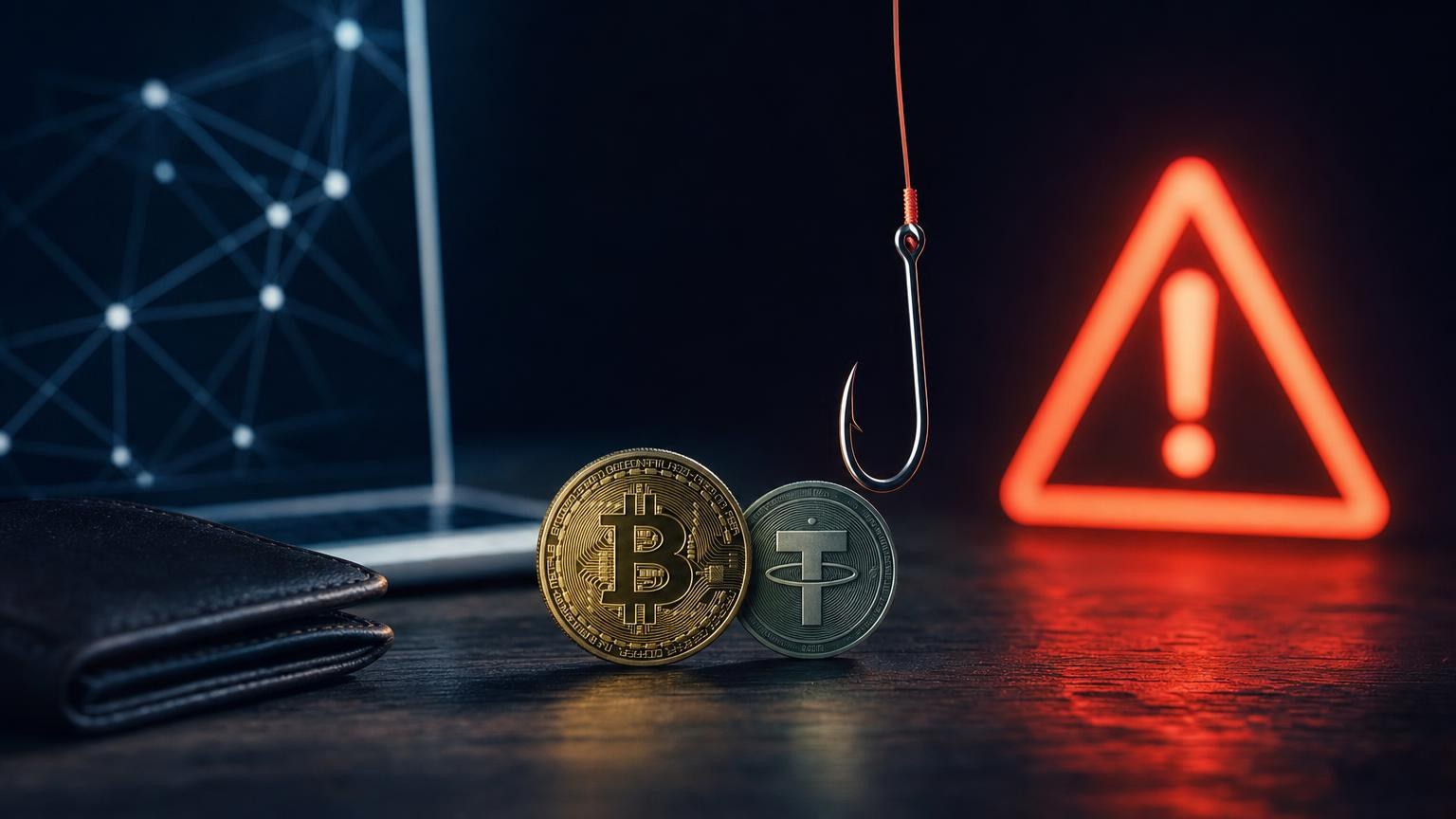
A safe crypto transfer begins with a simple model: the website, the exchange order, the receiving address, and the blockchain network are separate things to verify. A professional-looking page cannot prove who controls the destination wallet. Once BTC or USDT has been sent, correcting a wrong address, incompatible network, or fraudulent payment request may be impossible.
The Claim-Checking Protocol
Fact: HTTPS protects the connection, not the honesty of the exchange
Verdict: Misleading if treated as proof of legitimacy.
The misconception: A padlock or HTTPS address means the crypto exchange itself is genuine.
Why the shortcut appears: Browsers use connection-security indicators, so it is easy to read “encrypted” as “trusted.” In reality, an HTTPS certificate helps encrypt traffic between the browser and the site. Chrome still advises users to check the site name in the address bar, even when the connection is secure. [1]
The damage: A phishing site can imitate an order form, display a plausible rate, and collect login details or direct BTC and USDT to an attacker-controlled address.
How to verify: Read the entire hostname, not just the brand-like portion. Watch for substituted letters, extra words, unexpected subdomains, and unfamiliar domain endings. Open the service through an independently obtained address rather than an unsolicited message or advertisement. A browser warning about a deceptive or unsafe site is a reason to stop, not a technical obstacle to bypass. [2]
Practical takeaway: Require HTTPS, but never use the padlock as the final identity check.
Fact: A polished order page does not prove who controls the receiving address
Verdict: Not confirmed until the payment details are independently checked.
The misconception: If the amount, countdown, logo, and order number look convincing, the displayed wallet address must belong to the exchange.
Why the shortcut appears: People naturally evaluate the visible interface. A phishing copy can reproduce that interface while replacing the only detail that determines where the funds go: the destination address or QR code.
The damage: Confirmed Bitcoin payments generally cannot be cancelled by a central operator; a refund depends on the recipient returning the funds. Bitcoin safety guidance therefore recommends checking the entire receiving address rather than comparing only its first and last characters. [3]
How to verify: Compare the full address shown by the order with the full address presented through the service’s independently accessed official interface. Confirm the asset, requested amount, and network at the same time. If the address arrives only through a direct message, email, pop-up chat, or QR code, do not assume that the surrounding branding authenticates it.
Practical takeaway: Treat the receiving address as payment instructions that require their own verification, not as a decorative field on the page.
Fact: “USDT” alone does not identify the blockchain network
Verdict: Confirmed.
The misconception: Any USDT withdrawal option can be used for any USDT deposit address because the ticker is the same.
Why the shortcut appears: Wallets and exchanges often place the asset name in the most visible position, while the protocol or network appears in a smaller selector. Tether documents USD₮ on multiple supported protocols, which means the asset label by itself is not a complete routing instruction. [4]
The damage: Sending through a network that the receiving service does not support may prevent automatic crediting. Recovery, if technically possible at all, depends on the recipient’s infrastructure and policies and should never be assumed.
How to verify: Check the exact network on both sides before creating the transaction. The withdrawal network selected in the sending wallet must match the network accepted for that specific exchange order. Where a token contract is relevant, use official project documentation and the receiving platform’s current instructions rather than a contract address copied from search results or a chat message.
Practical takeaway: Match three fields: asset, network, and destination address. A match on “USDT” covers only the first.
Fact: A successful test transfer limits exposure but does not authenticate the exchange
Verdict: Depends on conditions.
The misconception: If a small transaction works, a larger transaction to the same service is safe.
Why the shortcut appears: A test transfer is a sensible technical check. It can reveal an incorrectly copied address, a network mismatch, or a deposit that is not being detected. The test result is easy to overextend into a judgment about the recipient’s future conduct.
The damage: A fraudulent operator can accept or return a small amount and then interfere with a later transfer. A new order may also generate different payment details, making the previous test irrelevant to the new destination address.
How to verify: Confirm the test transaction in a suitable blockchain explorer and verify that the expected order was credited. For every later order, repeat the domain, asset, network, address, amount, and terms checks. Do not copy old payment details into a new transaction unless the service explicitly confirms that they remain valid.
Practical takeaway: Use a test transaction as one layer of loss control, not as a certificate of trust.
Fact: An exchange does not need your seed phrase or private key to receive crypto
Verdict: Confirmed.
The misconception: Support may need wallet secrets to verify a delayed BTC or USDT payment, synchronize the wallet, or release the exchange.
Why the shortcut appears: A fake support agent can wrap a request in technical language, especially when the user is already worried about a pending transaction. The request may be presented as an exceptional recovery procedure.
The damage: A seed phrase or private key gives control over the corresponding wallet. Bitcoin’s anti-scam guidance states that legitimate support should not request these secrets. [5]
How to verify: Close the conversation and reach the service through contact details obtained independently. A real transaction investigation can use an order identifier, public receiving address, transaction ID, asset, network, and amount. None of those requires disclosure of a seed phrase or private key.
Practical takeaway: Never enter wallet recovery words into an exchange page, “verification” form, screen-sharing session, or support chat.
Fact: Urgent replacement payment instructions require a complete restart of verification
Verdict: Misleading when urgency is used as authority.
The misconception: A message saying “send now,” “the address has changed,” or “your order will be frozen” is credible because it contains order details.
Why the shortcut appears: A deadline reduces the time available to inspect the domain, contact the service separately, or question an unexpected change. Regulators identify unsolicited contact and pressure to act quickly as recurring scam signals. [6]
The damage: The sender may redirect the payment to a different wallet or persuade the user to make a second transfer while claiming that the first one is stuck.
How to verify: Do not reply through the same message thread. Independently open the service and check the order status there. If support claims that payment details changed, ask for confirmation through the official interface before sending anything. A countdown does not override an address mismatch.
Practical takeaway: Unexpected urgency should slow the transaction down. It should never shorten the verification process.
Where the Honest Answer Depends on Context
Not every unusual condition proves phishing. A rate may have a validity window, a transaction may await network confirmations, and an exchange may request additional information after a compliance review. The deciding question is whether the requirement appears in the genuine service interface, applies to the current exchange direction, and can be verified without exposing wallet secrets or sending an unexplained extra payment.
Verification requirements can differ by asset, direction, amount, jurisdiction, and compliance outcome. Local rules also vary, so the absence of a particular check in one transaction does not guarantee the same process elsewhere. Equally, a request for information is not automatically legitimate merely because it uses terms such as AML, compliance, or account security.
Availability is contextual too. A service may work with assets including BTC and USDT without supporting every possible pair, blockchain network, or direction at a given moment. Before creating an order, confirm that the required route and network are currently offered. Do not send funds based on an old screenshot, cached page, previous order, or third-party listing.
Rates, fees, minimum or maximum amounts, payment timeframes, and required confirmations are dynamic conditions. They must be read in the current order details before the wallet transaction is signed. If the final wallet screen conflicts with the exchange order, stop and resolve the difference rather than choosing whichever value seems more favorable.
After completing the independent safety checks above, the practical next step is to review the current exchange direction and requirements before creating an order. This confirms availability; it does not replace checking the domain, network, address, and final wallet screen.
Safety Checks Not Covered by the Claims
- Secure the device first. Update the operating system and wallet software. Unknown browser extensions, remote-access tools, or clipboard-modifying malware can interfere with an otherwise legitimate transaction.
- Recheck after pasting. Compare the full destination address in the wallet with the order details after pasting it. Do this again on the final confirmation screen, where the actual transaction is authorized.
- Protect the exchange account. If an account is required, use a unique password and enable a strong form of multifactor authentication when available. MFA can reduce the risk of an attacker entering an account with a stolen password. [7]
- Record the transaction. Keep the order identifier, transaction ID, selected asset and network, amount, and applicable terms. A blockchain explorer can show what was broadcast, but it cannot prove that the owner of the receiving address will honor an off-chain exchange promise.
- Account for volatility. BTC and other crypto assets can change in market value while an order is being prepared or confirmed. Check how the quoted amount is defined and when it expires; do not interpret a changed quote as proof of fraud without comparing it with the stated terms.
- Check the rules that apply to you. Crypto exchange, reporting, and tax obligations differ between countries and may also depend on the transaction. General website content is not a substitute for current local requirements.
The Decision Before You Press Send
A credible exchange process should leave you able to answer six questions without guessing: Am I on the correct domain? Is this the intended asset? Do the sending and receiving networks match? Have I checked the entire address? Are the current amount and conditions clear? Has anyone requested a secret or an unexplained second payment?
If one answer is uncertain, leaving the transaction unsigned is the safer result. BTC and blockchain-based token transfers are designed to settle without a bank-style cancellation mechanism; Ethereum guidance likewise notes that transactions sent to a wrong address cannot be reversed by a central organization. [8]
The strongest warning sign is rarely a single spelling mistake or design flaw. It is a broken chain of verification: a link obtained from a stranger, a domain that was not checked, a network selected by assumption, an address changed under pressure, or “support” asking for control of the wallet. Verify each link in that chain before any BTC or USDT leaves your wallet.