
When you look at a construction site, nothing commands attention quite like the towering machinery moving thousands of pounds of steel, concrete, or HVAC equipment through the air. However, choosing the right partner for these critical lifts is about far more than just finding a machine with a hook and a boom. It is an exercise in mitigating massive financial, safety, and project-delay risks. A single dropped load, a tipped machine, or a delayed arrival can completely derail your project timeline, obliterate your profit margins, and most importantly, endanger the lives of your crew and the public.
For many project managers and procurement officers, the temptation is to send out a quick Request for Proposal (RFP) and simply award the job to the lowest bidder. Moving beyond price is the most crucial mental shift you can make when planning a heavy lift. The lowest hourly rate often ends up costing the most in the long run. Hidden travel fees, poorly maintained machinery that breaks down on site, inexperienced operators who work slowly, or a lack of proper safety planning can quickly turn a “cheap” lift into a multimillion-dollar liability.
This guide is designed to serve as your comprehensive blueprint for vetting lifting partners. We will move beyond the superficial aspects of hiring and dive deep into the specific, actionable steps you must take to protect your project. From calculating ground bearing pressures and reading safety logs to demanding 3D lift plans and scrutinizing contract fine print, this article covers everything you need to know to make an informed, secure, and financially sound decision.
Defining the Scope of Your Lift Before Contacting Vendors
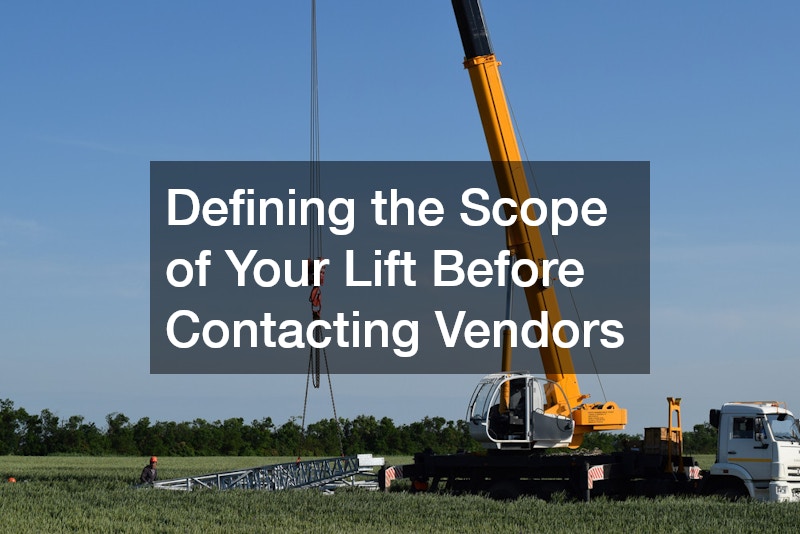
Before you even begin searching for crane rental services, you must have a crystalline understanding of your own project’s parameters. Far too many project managers reach out to vendors with only a vague idea of what they need, leading to inaccurate quotes and mismatched machinery. The preliminary groundwork you do in-house dictates the success of the entire operation. This phase requires meticulous calculation and a thorough understanding of your job site’s physical limitations.
Calculate Your Load Weights and Center of Gravity Accurately
The single most common mistake in heavy lifting is underestimating the weight of the load. When you are calculating your total lift weight, you cannot simply look at the manufacturer’s shipping weight for a piece of equipment and call it a day.
-
Gross Weight Calculation: You must factor in the weight of the item itself, plus all internal fluids, packaging, and the exact weight of the rigging gear (shackles, slings, spreader bars, and the hook block). Rigging gear alone can add hundreds or even thousands of pounds to your gross weight, potentially pushing you out of a machine’s safe operating chart.
-
Dynamic Loading: Consider the wind sail area of your load. A lightweight but massive object (like a large fiberglass tank) will catch the wind, creating dynamic loading scenarios that effectively increase the strain on the boom.
-
Center of Gravity (COG): Identifying the exact center of gravity is paramount. If the COG is off-center and not properly accounted for in the rigging plan, the load will swing violently the moment it leaves the ground. This swing can overload the boom, cause the machine to tip, or slam the load into adjacent structures.
Analyze Site Accessibility and Terrain Constraints
You must evaluate your site exactly as a lift director would. Standard equipment rentals like skid steers or man lifts can navigate rough terrain with relative ease, but heavy lifting machinery requires specific ground conditions and spatial clearances to operate safely.
-
Ground Bearing Pressure: The earth beneath the outriggers must be able to support the combined weight of the machine, the counterweights, and the load itself. You must analyze soil composition. Is it freshly backfilled? Is there an underground utility vault, parking garage, or septic system nearby that could collapse under the immense point-load pressure?
-
Overhead and Underground Obstructions: Map out every power line, tree branch, and adjacent building. You must maintain strict minimum clearance distances from energized power lines as mandated by safety regulations.
-
Swing Radius and Tail Swing: The machine needs room not just to lift, but to rotate. The counterweights on the back of the cab (the tail swing) require significant clearance. If you are working in a tight urban alleyway or a congested industrial plant, you must measure the exact swing radius available to ensure the machine can physically operate without striking obstacles.

Interrogating Safety Records and Industry Certifications
Once you know exactly what your lift requires, it is time to audit your potential partners. A vendor’s marketing materials will always claim that “safety is our number one priority,” but you must look past the slogans and demand hard data. The liability differences between hiring a full-service crane contractor and simply renting a piece of machinery are vast, and you need to ensure whoever is coming onto your site has an unimpeachable track record.
Request OSHA Logs and EMR (Experience Modification Rate) Data
Do not take a vendor’s word for their safety record; ask for the documentation that insurance companies and federal regulators use to judge them.
-
Understanding the EMR: The Experience Modification Rate (EMR) is a metric used by insurance companies to gauge the past cost of injuries and future chances of risk. The industry average is 1.0. If a crane company has an EMR of 1.2, it means they have had 20% more safety incidents and claims than the average competitor. Conversely, an EMR of 0.8 shows a stellar safety culture. You should establish a hard rule: do not hire vendors with an EMR above 1.0.
-
Reading 300A Logs: Request the vendor’s OSHA 300A summary logs for the past three to five years. These logs summarize all work-related injuries and illnesses. Look for patterns. Are there recurring instances of crushed hands, slip-and-falls, or rigging failures? A pattern of similar accidents indicates a systemic failure in their internal training and safety culture, not just bad luck.
Confirm Up-to-Date NCCCO Certifications and Rigger Training
The machinery is only as safe as the human beings operating it and directing it from the ground.
-
Operator Certification: Ensure every operator holds a current National Commission for the Certification of Crane Operators (NCCCO) certification, or an equivalent recognized standard, specifically for the type of machine they will be operating (e.g., lattice boom crawler vs. telescopic boom rough terrain).
-
Rigger and Signal Person Qualifications: The operator is blind to many aspects of the lift and relies entirely on the ground crew. Inquire about the qualifications of the riggers and signal persons. Are they certified? Do they use standardized hand signals and dedicated radio channels? A miscommunication between the signal person and the operator is one of the leading causes of dropped loads and struck-by accidents. Demand proof of their training before they step foot on your site.

Verifying Fleet Condition and Maintenance Protocols
Even the most highly skilled operator cannot safely complete a lift if the machinery is failing. Heavy lifting equipment is subjected to immense structural stress, and poor maintenance is a ticking time bomb. A highly reputable crane rental business will have transparent, rigorous maintenance protocols that go far beyond basic fluid changes. You need to verify how they manage their assets, as their internal approach to industrial equipment repair directly impacts your project’s timeline and safety.
Ask for Recent Annual Inspection Reports and Daily Maintenance Logs
You have the right to inspect the paperwork for the exact machine that will be sent to your job site. Do not accept generic assurances; ask for the specific documentation for the serial number arriving on your site.
-
Third-Party Annual Inspections: By law, lifting machinery must undergo a comprehensive annual inspection by a qualified, independent third-party inspector. This inspection checks structural integrity, wire rope wear, hydraulic systems, and safety devices like anti-two-block mechanisms and load moment indicators (LMIs). Request a copy of the most recent annual inspection certificate. If it is expired or they hesitate to provide it, walk away immediately.
-
Daily Pre-Shift Logs: Operators are required to perform a daily visual and operational inspection before starting their shift. Ask to see a sample of recent daily logs for the machine you are renting. Are these logs filled out diligently, or do they look like they were rushed and pencil-whipped at the end of the week? A vendor that enforces strict daily logging is a vendor that catches minor issues (like a fraying wire rope or a small hydraulic weep) before they become catastrophic on-site failures.
Inquire About Breakdown Response Times and Replacement Protocols
Machine breakdowns happen, even to the most well-maintained fleets. The mark of a reliable partner is how quickly they can rectify the situation when things go wrong.
-
Emergency Mechanical Support: Ask the vendor about their field service capabilities. Do they have mobile mechanic trucks ready to dispatch? What is their guaranteed response time for an on-site breakdown? If your lift is scheduled for a weekend or a night shift to minimize traffic disruption, do they have 24/7 mechanical support available?
-
Backup Machinery Availability: If a machine suffers a major failure that cannot be fixed on-site—such as a blown slew ring or a cracked outrigger box—what is the backup plan? Inquire if they have similar-sized machines in their yard that can be swapped out quickly. If they do not have depth in their fleet, a breakdown could leave you stranded for days or weeks while they wait for specialized parts, completely derailing your construction schedule.
Evaluating Operator Expertise and Lift Planning Capabilities
The physical machine is merely a tool; the execution of the lift relies entirely on human expertise and meticulous planning. The intellectual property and logistical engineering provided by professional crane services are what actually ensure your multi-ton load lands safely on its target. You must evaluate the vendor’s capacity to plan complex operations.
Match Operator Experience to Your Specific Lift Type
Years in the seat do not necessarily equate to the right kind of experience. Operating a machine to unload steel beams in a wide-open dirt lot is vastly different from setting a delicate MRI machine into a fourth-story hospital window in a congested downtown area.
-
Specific Task Experience: When speaking with your vendor, demand an operator who has successfully completed lifts highly similar to yours. If you are executing a “blind lift” (where the operator cannot see the load’s final destination and must rely entirely on radio commands), you need an operator deeply experienced in blind operations.
-
Multi-Crane Lifts: If your project requires a tandem lift (using two machines simultaneously to lift a single, oversized object), this exponentially increases the risk and complexity. Tandem lifts require operators who are accustomed to moving in perfect, synchronized harmony. Ask to review their standard operating procedures for multi-machine lifts and ensure the operators assigned have a history of working together.
Demand a Comprehensive, 3D Engineered Lift Plan
For any lift that is heavy, expensive, or occurring over active work zones, a “back of the napkin” sketch is entirely unacceptable. A top-tier crane rental company will have in-house engineers or lift planners who utilize modern software to map out every inch of the operation.
-
Critical Lift Plan Components: A formal lift plan should detail the exact machine model, counterweight configuration, outrigger spread, boom length, and radius. It must include a comprehensive rigging diagram specifying the exact slings, shackles, and lifting beams to be used, along with their respective working load limits. It should also establish hard parameters for weather, detailing the maximum allowable wind speed before the lift must be aborted.
-
3D Simulation and Clash Detection: Modern lift planning software allows engineers to build a 3D model of your job site, inputting adjacent buildings, power lines, and ground elevations. By simulating the lift digitally, the vendor can identify spatial clashes, boom deflections, and radius limitations long before the machine arrives. This process eliminates guesswork and ensures that when the machine sets up, it can complete the task exactly as promised.
Weighing Logistical Efficiency and Contract Structures
The final phase of choosing a partner involves navigating the logistics of mobilization and scrutinizing the financial and legal agreements. How a vendor gets the machine to your site, and how they bill you for it, can dramatically alter the final cost of the project. Often, the logistical advantages of utilizing a local crane service outweigh the seemingly lower hourly rates of a massive national conglomerate.
Factor in Mobilization, Demobilization, and Permitting Timelines
Heavy lifting machines do not simply drive down the highway like standard pickup trucks. They are massive, overweight, and over-dimensional pieces of equipment that require intense logistical orchestration to move.
-
Travel Time and Assembly Costs: Understand exactly how you are being billed for travel. Are you paying from the moment the machine leaves the vendor’s yard (port-to-port billing), or only when it arrives on site? For larger machines (like crawler cranes or high-tonnage all-terrain machines), the boom, counterweights, and jib must be stripped down and transported on multiple flatbed semi-trucks. You must factor in the hourly costs of these transport trucks, as well as the time and labor required for the support crew to assemble the machine once it arrives at your site.
-
Road Permitting and Police Escorts: Moving over-dimensional loads requires municipal and state permits, and often necessitates state police escorts or private pilot cars. A vendor with deep roots in your specific region will already have established relationships with local departments of transportation. They understand the specific municipal curfews, preferred truck routes, and weight bridge limitations, allowing them to secure travel permits much faster than an out-of-state vendor.
Scrutinize the Fine Print of Bare Rental vs. Operated Agreements
The structure of your contract dictates where the legal and financial liability rests. This is similar to evaluating local construction equipment rental agreements, but the financial stakes are exponentially higher due to the value of the machinery and the risk of the lifts.
-
Bare Rental: In a bare rental agreement, the vendor simply provides the machine. You, the contractor, are responsible for providing a certified operator, daily maintenance, fuel, and—most importantly—comprehensive insurance coverage for the machine and the lift. While the upfront cost looks lower, the liability risk you assume is massive. You are entirely responsible if your operator overloads the boom and destroys the machine.
-
Operated and Maintained (O&M): In an O&M contract, the vendor provides the machine, the operator, the riggers, and handles all maintenance and fuel. They also carry the primary liability insurance for the lift itself (though you must still verify their insurance certificates and ensure your company is listed as an additionally insured entity). For the vast majority of contractors, an O&M agreement is the safest and most reliable route.
-
Beware of Hidden Surcharges: Read the fine print carefully to identify hidden fees that can inflate the final invoice. Look for minimum hourly guarantees (e.g., an 8-hour minimum charge even if the lift takes 2 hours). Check for fuel surcharges, overtime rates for operators if the lift bleeds into the evening, and fees for providing the rigging gear. A transparent vendor will line-item all of these potential costs in their initial quote, rather than burying them in the terms and conditions.
Conclusion: Securing Your Project’s Success
Choosing the right partner for your heavy lifting needs is one of the most critical decisions you will make during your project’s lifecycle. As we have explored, a successful lift requires far more than just renting a heavy piece of machinery; it requires rigorous preliminary planning, uncompromising safety standards, meticulous mechanical maintenance, and expert operational execution. When you prioritize finding a vendor that aligns with these high standards, you are not just spending money on a service—you are investing in risk mitigation, job site safety, and schedule certainty.
To ensure your next lifting operation is seamless, keep this final rapid-fire checklist in mind before signing any contract:
-
Know Your Load: Have exact gross weights, rigging weights, and the center of gravity calculated before reaching out.
-
Check the EMR: Never hire a vendor with an Experience Modification Rate above 1.0, and review their OSHA 300A logs for recurring safety issues.
-
Verify Inspections: Demand to see the third-party annual inspection and daily maintenance logs for the specific machine coming to your site.
-
Review the Lift Plan: Insist on a comprehensive, 3D-engineered lift plan for complex or heavy operations to eliminate guesswork.
-
Read the Fine Print: Understand whether you are entering a bare or operated agreement, and account for travel, assembly, and permitting costs in your budget.
Stop treating your lifting vendors as interchangeable, transactional suppliers. By demanding transparency, engineering expertise, and verifiable safety records, you transition them into strategic partners. When you take the time to deeply vet the companies handling your most critical loads, you protect your crew, your profit margins, and the long-term success of your entire project.